In the previous section, we retrieved the plaintext password for daniela and gained access to the WordPress dashboard on INTERNALSRV1. Let's review some of the settings and plugins.
We'll begin with the configured users:
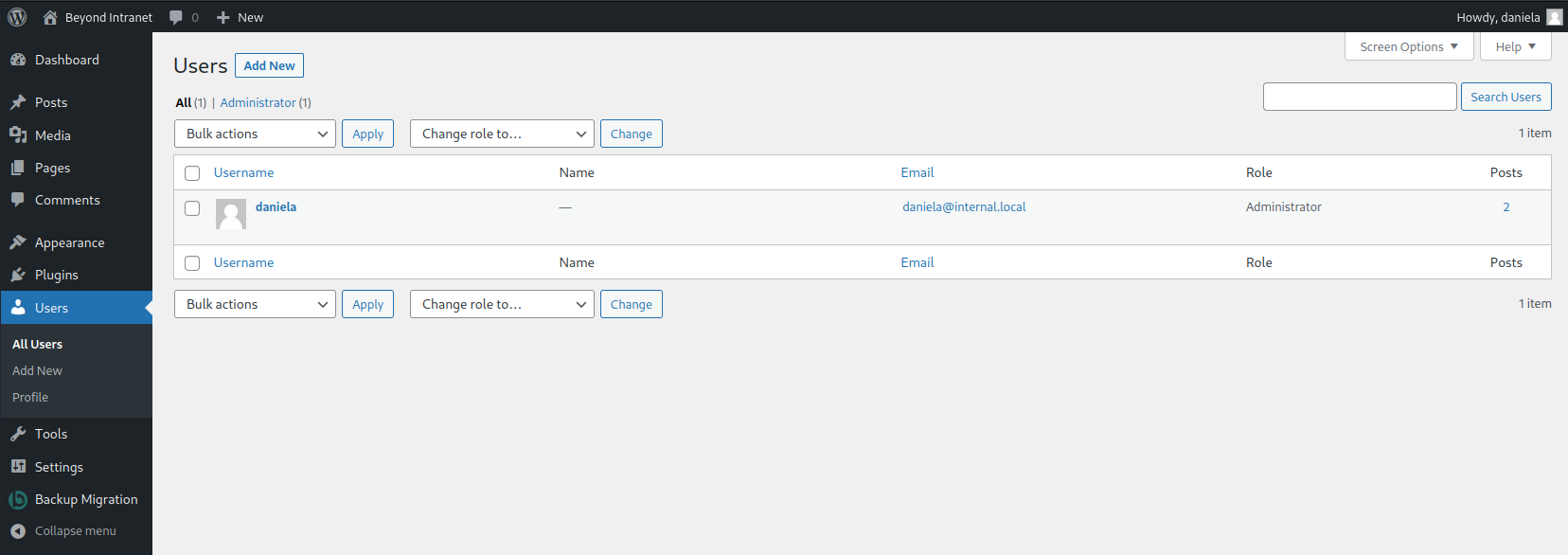
Figure 20: Daniela is the only WordPress user
Figure 20 shows daniela is the only user. Next, let's check Settings > General.
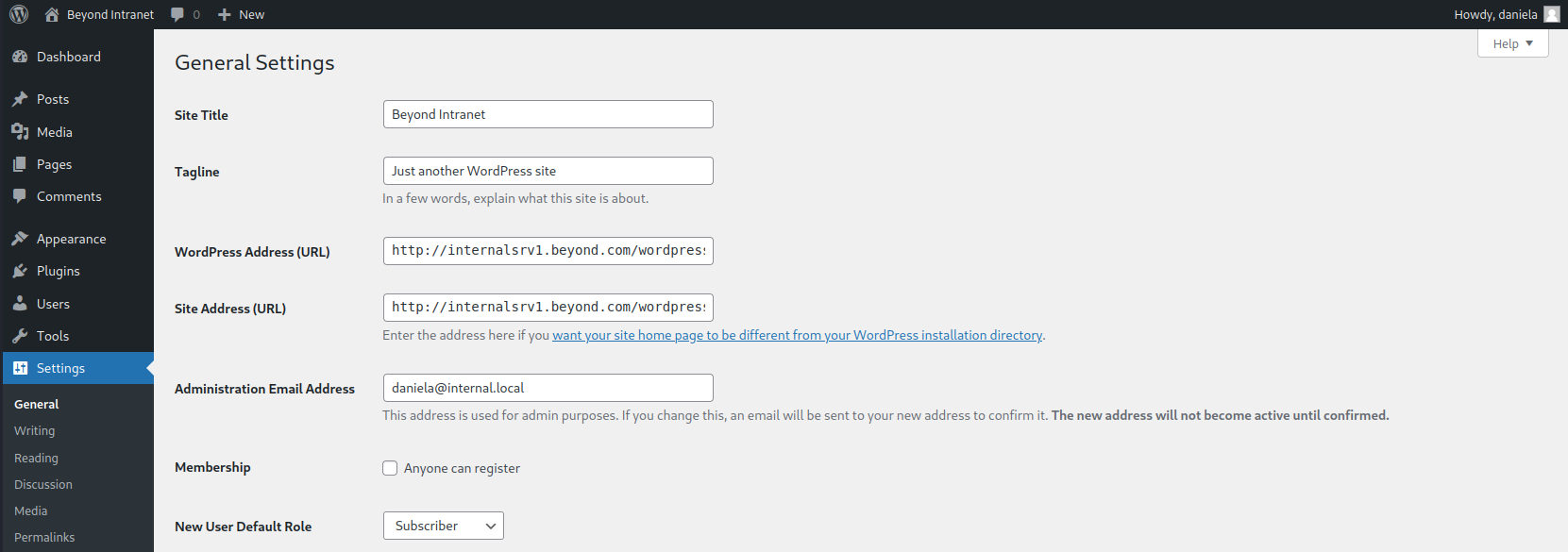
Figure 21: General WordPress settings
The WordPress Address (URL) and Site Address (URL) are DNS names as we assumed. All other settings in Settings are mostly default values. Let's review the installed plugins next.
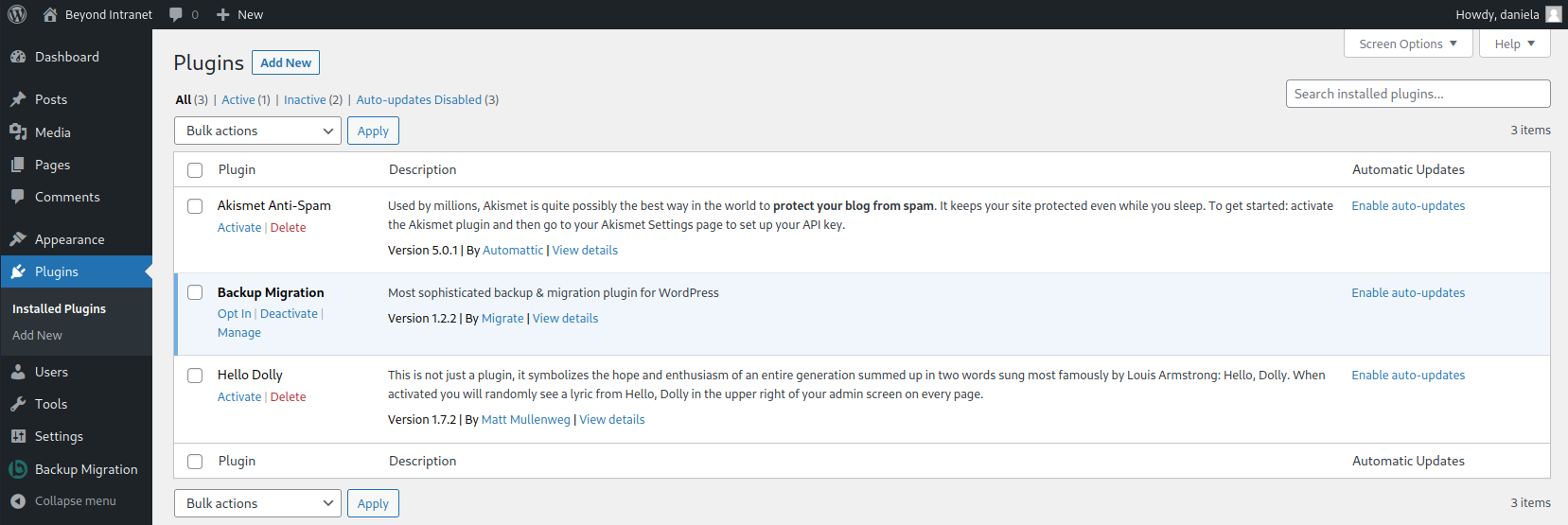
Figure 22: Installed WordPress Plugins
Figure 22 shows three plugins, but only Backup Migration1 is enabled. Let's click on Manage, which brings us to the plugin configuration page. Clicking through the menus and settings, we discover the Backup directory path.
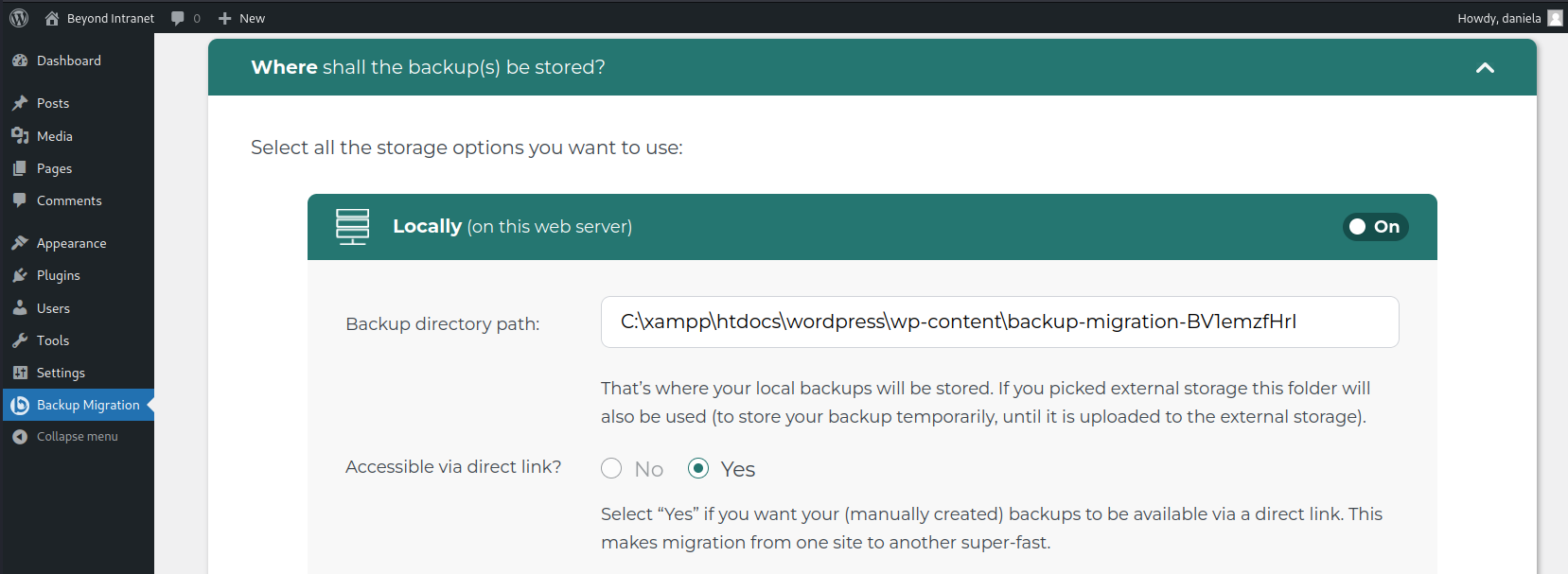
Figure 23: Backup Migration plugin settings
Figure 23 shows that we can enter a path in this field, which will be used for storing the backup. We may abuse this functionality to force an authentication of the underlying system.
Let's pause here for a moment and plan our next steps. At the moment, there are two promising attack vectors.
The first is to upload a malicious WordPress plugin to INTERNALSRV1. By preparing and uploading a web shell or reverse shell, we may be able to obtain code execution on the underlying system.
For the second attack vector, we have to review the BloodHound results again and make some assumptions. As we have discovered, the local Administrator account has an active session on INTERNALSRV1. Based on this session, we can make the assumption that this user account is used to run the WordPress instance.
Furthermore, it's not uncommon that the local Administrator accounts across computers in a domain are set up with the same password. Let's assume this is true for the target environment.
We also learned that the domain administrator beccy has an active session on MAILSRV1 and therefore, the credentials of the user may be cached on the system.
Due to SMB signing being disabled on MAILSRV1 and INTERNALSRV1, a relay attack is possible if we can force an authentication.